
- Search
- Riyadh26 ° C


Why Traders in the Gulf Coast Should Keep a Close Eye on the S&P 50
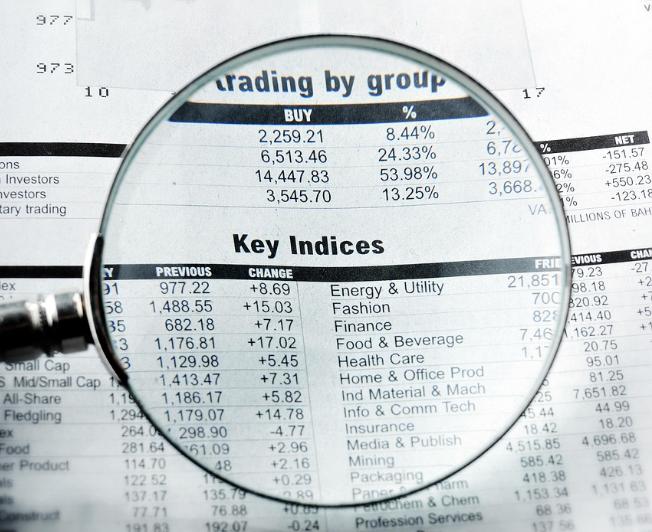
For any professional trader in the Gulf Cooperation Council (GCC) region, whether based in Riyadh, Dubai, or Doha, understanding the intricate movements of their local stock markets is just the first step. The second, and perhaps more crucial step, is recognizing the heavy hand of global financial power, a hand often guided by the performance of the S&P 500.
Far from being just a parochial American index, the S&P 500 has evolved into the world's most significant benchmark, and its daily gyrations have a direct and measurable impact on markets thousands of miles away, including those along the Gulf Coast.
The S&P 500: A Global Economic Barometer
The reason the S&P 500 matters globally is simple: it is a deep, broad, and liquid measure of the world's largest economy. Comprising 503 leading publicly traded U.S. companies, spanning everything from technology giants like Apple and Microsoft to industrial and healthcare behemoths, the index represents approximately 80% of the total U.S. equity market value.
The core of its global relevance lies in two factors: corporate earnings and liquidity. Many companies in the index are multinational corporations with significant operations, revenues, and supply chains stretching across the globe. Their earnings reports and forecasts often serve as a temperature check for the health of global consumption and business investment.
When these bellwether firms sneeze, the global economy often catches a cold. Furthermore, the sheer volume of capital flowing into and out of S&P-linked products, like ETFs and futures, means that shifts in investor sentiment in New York can generate tidal waves of capital movement worldwide.
The Gulf-US Interdependence: More Than Just Oil
For traders in the GCC, the connection to the S&P 500 is intensified by a deeply entrenched economic interdependence with the United States. While the historical link has always been the petrodollar system (where major Gulf oil exporters have traditionally priced oil in U.S. dollars and recycled a large portion of their surpluses into dollar-denominated assets), today's relationship is multi-faceted:
● Currency Pegs: All GCC currencies (except the Kuwaiti Dinar) are officially or practically pegged to the U.S. Dollar. This means that when the U.S. Federal Reserve adjusts interest rates, Gulf central banks must often follow suit to maintain their currency pegs. This direct link between U.S. monetary policy and Gulf fiscal reality means that market expectations that are priced into the S&P 500 often reacting instantly to Fed commentary.
● Correlation Data: Financial analysis has repeatedly confirmed a long-term co-movement between US stock markets, including the S&P 500, and several GCC stock markets. A study covering data up to 2018 found a definite co-movement between US indices and those of the UAE, Saudi Arabia, Qatar, Oman, Kuwait, and Bahrain. While diversification efforts by the Gulf states are underway, major volatility in the US still transmits as significant spillovers to the GCC's equity markets.
Volatility and Spillover Effects: A Recent Example
The correlation isn't always perfect, but when the S&P 500 experiences a sharp drop, it creates a risk-off environment that impacts every corner of the globe. For example, during a volatile week in November 2025, major US indices, including the SPX, registered sharp declines. These moves were often triggered by mixed jobs reports or hawkish Federal Reserve commentary, which immediately shifts global risk appetite.
In such scenarios, foreign investors, including large institutional funds that invest in the GCC, begin to deleverage and shift capital back to perceived safe-haven assets, or simply cover losses elsewhere. This repatriation of capital can trigger sudden selling pressure on relatively smaller and less liquid Gulf markets, regardless of strong local fundamentals.
Strategic Edge for GCC Traders
For the Gulf Coast trader, tracking the S&P 500 offers a significant strategic advantage. It provides an early warning system. By monitoring the index's future contracts during non-US trading hours, a local trader can gain valuable insight into the mood of the world's largest equity market well before their own exchange opens.
This knowledge can inform critical decisions, such as adjusting positions in companies listed on the TASI (Saudi Arabia) or the DFM (Dubai Financial Market) that have exposure to the global economy. In short, the S&P 500 is the most influential index on Earth, and for those trading markets deeply linked to global capital flows and the US dollar, ignorance of its movements is an unaffordable luxury.


NWC: Naming 2027 as ‘Year of Water’ Reflects Wise Leadership’s Commitment to Water Sector
Wednesday 29 July, 2026 5:18
Saudi Energy signs SAR 15.8B financing facility with 7 banks
Wednesday 29 July, 2026 9:07
MIS awarded SAR 179.8M project by KSMC
Wednesday 29 July, 2026 5:09
ADNOC Distribution launches 'Engage' advertising platform
Wednesday 29 July, 2026 5:05
Aldar posts AED4.9 billion first-half net profit, up 18%
Wednesday 29 July, 2026 5:07