
- Search
- Riyadh26 ° C


The Network Effect Behind GRA's Worldwide Winners' Circle
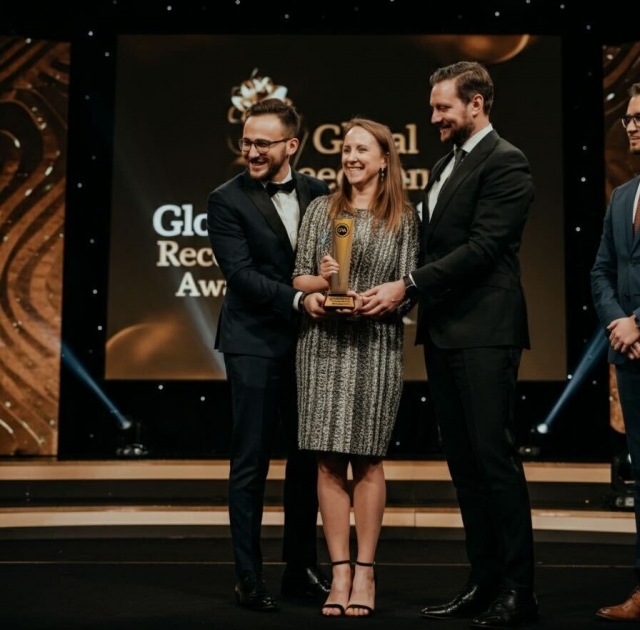
Last month, Jethro Sparks received an email that perfectly captured the Global Recognition Awards' evolution. A hospitality company in Singapore had just secured a major partnership with a tech firm in Switzerland, and both businesses happened to be GRA winners.
They had connected through the awards platform, discovered complementary strengths, and, within weeks, inked a deal to expand their operations across three continents. What struck Sparks was not just the business success but also how naturally these companies had found each other across 6,000 miles and vastly different industries.
This story illustrates something interesting happening in global business recognition. While traditional awards programs hand out certificates and call it finished, GRA has built a living network of excellence that creates ongoing value long after the initial recognition ceremony.
The platform now spans 81 countries and connects businesses through network effects, where each new member makes the entire system more valuable for everyone else.
The Mathematics of Selective Excellence
With a 4% acceptance rate, the organization processes thousands of applications to identify only the most exceptional achievements. This rigorous screening creates scarcity value, where limited availability increases perceived worth and actual utility.
The platform employs the Rasch model, a statistical methodology borrowed from educational assessment, to convert subjective business evaluations into objective measurements. This scientific approach allows fair comparison between a manufacturing company in Mexico and a fintech startup in Finland, despite their vastly different operating environments and success metrics. Traditional service awards rely on panel discussions and gut feelings; GRA uses a mathematical model.
Winners report measurable outcomes that validate this selective approach. Seventy-two percent experience increased client inquiries within six months of recognition, while 64% see improved employee morale. These are not vanity metrics but concrete business improvements that justify the rigorous selection process.
Speed matters too. While competitors take three to six months to process applications, GRA delivers blockchain-verified results in 14 days. This rapid turnaround allows businesses to leverage recognition for time-sensitive opportunities like funding rounds, partnership negotiations, or market launches. The blockchain verification system maintains 100% uptime while creating tamper-proof credentials that can be instantly authenticated anywhere in the world.
Global Networks Create Local Opportunities
The true power of GRA lies in the connections between winners. When a real estate developer in Dubai connects with an architecture firm in Denmark through the platform, both companies gain access to markets and expertise they could not reach independently. This cross-pollination of ideas and opportunities creates value beyond the original recognition.
Sparks describes this as the Michelin Star for businesses. Just as restaurants worldwide understand the value of Michelin recognition, GRA aims to establish universal standards for business excellence that transcend geographic and industry boundaries. The platform's various categories span traditional sectors like hospitality and manufacturing alongside emerging fields like sustainability and social responsibility.
Geographic diversity amplifies these network effects. Winners gain credibility when expanding internationally, as this global recognition provides third-party validation from respected industry experts. This proves particularly valuable for businesses entering unfamiliar markets where local credibility takes years to establish. The awards serve as a universal business language that translates across cultural and regulatory differences.
Technology enables this global reach while maintaining quality standards. The blockchain verification system processes evaluations from remote locations without requiring physical presence in every market. This technological backbone allows GRA to serve businesses in emerging economies alongside established corporations in developed markets, democratizing access to international recognition.
The network effect creates compound value over time. Each new winner strengthens the overall platform, making membership more attractive to future applicants. This positive feedback loop has driven expansion from regional recognition to a global platform. The goal of reaching 100 countries by 2025 reflects not just geographic ambition but the mathematical reality that larger networks create exponentially more connection opportunities.
Critics might argue that business awards are nothing but marketing theater. GRA's measurable outcomes suggest otherwise. When 81% of winners use their recognition in marketing strategies and see concrete business results, the awards become more than a symbolic value and have become strategic business tools.
The network effects that drive GRA's success point toward a shift in how businesses establish credibility and find opportunities. Traditional methods like cold outreach and trade shows are giving way to curated networks where proven excellence creates immediate trust and connection possibilities. The businesses that recognize and participate in these networks early will likely enjoy sustainable competitive advantages over those that rely on outdated relationship-building methods.
The question facing business leaders is whether they can afford to remain outside networks where their competitors are already building relationships and discovering opportunities. Excellence alone no longer guarantees success; excellence combined with strategic network participation creates the compound advantages that define market leaders in an interconnected global economy.


Luxury, Innovation and Sustainability: What to expect at Moscow Fashion Week
Wednesday 11 March, 2026 12:29

SIIG signs agreements with Shareek, Investment Ministry to enable bio-protein production
Thursday 12 March, 2026 4:07
BROXO Introduces Brand Update Across Water Treatment Markets
Friday 13 March, 2026 12:47