
- Search
- Riyadh26 ° C


Cigna International Health Study 2025: UAE Emerges as a Global Leader in Vitality, Well-Being, and Health Innovation
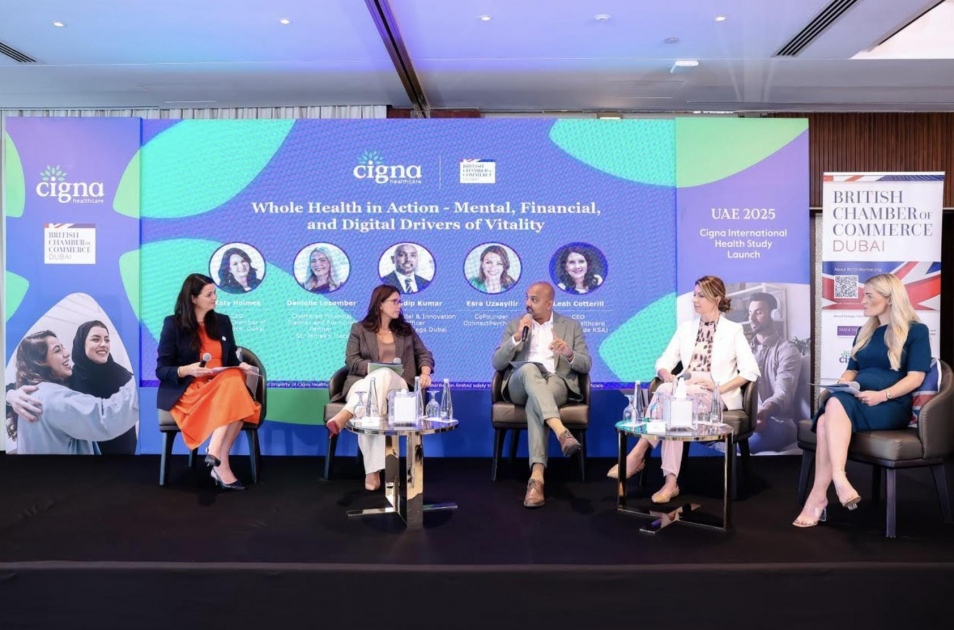
The UAE has once again demonstrated its leadership in health and well-being, achieving a Vitality score of 73.3 and Overall Well-Being score of 70%, placing it second in the world in the latest Cigna International Health Study 2025, released today by Cigna Healthcare. The findings of the Study were unveiled at a launch event hosted in collaboration with the British Chamber of Commerce Dubai (BCCD).
The study, which surveyed 13,000 respondents across 13 global markets, reveals how vitality and well-being are evolving worldwide, highlighting the UAE’s consistent progress across physical, mental, financial, and workplace health. This improvement comes even as global averages declined across most dimensions of vitality.
Leah Cotterill, CEO, Cigna Healthcare MEA (outside KSA), said: “Despite global declines, vitality in the UAE continues to rise, underscoring the country’s commitment to making health and well-being a true national priority. Initiatives such as the Federal Mental Health Law, Dubai’s AED 105 million Mental Health Framework, and the integration of AI-driven healthcare reflect a forward-looking vision that places people at the center of progress. At Cigna Healthcare, we are proud to support this agenda by providing whole-health solutions that span physical, mental, financial, and workplace well-being. The UAE is not only improving the health of its people today but also setting global benchmarks for how nations can build resilient, future-ready societies.
The UAE’s results reaffirm the nation’s long-standing focus on holistic well-being. Beyond policy, this commitment is visible in practical initiatives that embed health into everyday life from programs that encourage flexible, family-friendly workplaces to community frameworks that strengthen resilience and social cohesion.
Key Findings of the Cigna Healthcare International Study:
- Family well-being remains the strongest dimension, with 71% ranking it ‘Excellent’ or ‘Very Good’ among well-being attributes.
- Mental well-being improved to 64%, with UAE residents ranking it above physical well-being as their top health priority.
- Financial well-being improved by 3 points to 35%, though it remains a key pressure point given rising living costs.
- Stress levels rose to 84%, underscoring the need for ongoing support to balance modern-day pressures.
The report also produced insightful results when examining gender differences. This includes:
- Male respondents reported that their workplace wellbeing improved by five points from 2024, whilst female respondents reported the same level of wellbeing to the previous year.
- 89% of men work over 40 hours per week, compared to 79% of women.
- Nearly half of men (52%) and women (48%) feel they work in environments that support their family and personal commitments, signalling a small but positive step toward equalizing gender support in the workplace.
Innovation and AI in Healthcare
The UAE also stands out globally for its trust in AI and digital health solutions, with residents showing significantly higher positive perceptions compared to the global average. Respondents highlighted the benefits of AI in areas such as shorter wait times, more accurate diagnosis, and improved chronic care at home.
These attitudes align with national priorities, including the UAE National Strategy for Artificial Intelligence 2031 and ongoing investments in digital health transformation. Together, they position the UAE as a pioneer in building a future-ready healthcare ecosystem.
Balancing Work and Life
The study found that UAE employees experience some of the most demanding yet rewarding jobs globally, with high levels of recognition and satisfaction
Resilience and Community Strength
Family and community support systems continue to serve as vital anchors for resilience in the UAE. Even as stress rises, strong adaptability, cultural cohesion, and openness to innovation are helping individuals sustain well-being across physical, emotional, and social dimensions.
Katy Holmes, CEO at British Chamber of Commerce Dubai, said: It’s a pleasure to once again collaborate with BCCD Annual Strategic Partner, Cigna Healthcare Middle East & Africa, for the launch of this year’s UAE edition of the Cigna International Health Study. At the Chamber, we place a strong emphasis on promoting dialogue and awareness around mental health and overall wellbeing in the UAE business community. Reliable and data-driven insights such as those provided by Cigna’s annual study are invaluable in helping employers and leaders understand evolving workforce needs and make informed decisions that support their people and businesses.’
During the event, industry experts led a panel discussion titled “Whole Health in Action – Mental, Financial, and Digital Drivers of Vitality.”
The panel brought together voices from business, health, and policy to explore what the 2025 Study reveals about the UAE’s priorities, how financial and mental health are reshaping the whole-health agenda, and how AI is transforming access and outcomes. Together, the discussion considered how employers, communities, and policymakers can build on this momentum to shape a healthier, more resilient future for all.
Panelists included:
- Moderator Katy Holmes, CEO at British Chamber of Commerce Dubai
- Leah Cotterill, CEO, Cigna Healthcare MEA (outside KSA)
- Sandip Kumar, Chief Digital and Innovation Officer at King’s College Hospital London
- Esra Uzsayilir, co-founder of ConnectPyschology


Al-Jadaan lauds East-West pipeline role in easing global energy crisis
Sunday 29 March, 2026 9:17
$1B hospitality platform to develop 50 hotels in Saudi Arabia
Sunday 29 March, 2026 9:18
UAE real estate sector shines with major projects, strong March sales
Monday 30 March, 2026 9:05
Emaar Development announces 100% dividend payout of AED4 billion
Monday 30 March, 2026 9:07
Presight, NodeShift forge strategic partnership to scale sovereign AI solutions globally
Monday 30 March, 2026 9:15