
- Search
- Riyadh26 ° C


Saudi Arabia to sustain investment in oil, gas, renewables, infrastructure: Minister
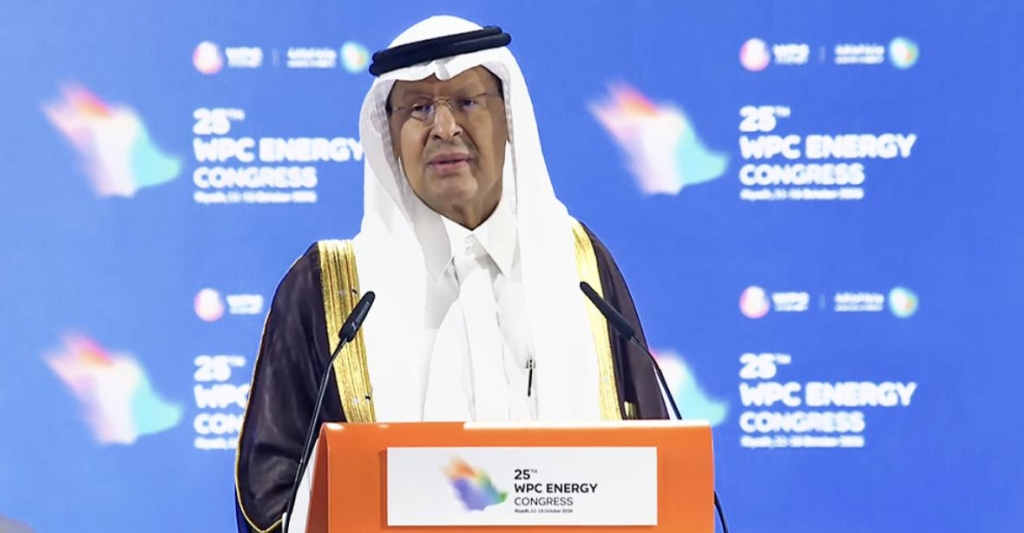
Saudi Arabia will continue investing in reliable oil and gas supplies, expanding renewable energy, strengthening electricity grids and storage facilities, upgrading gas infrastructure, and developing new technologies and low-emission solutions, Energy Minister Prince Abdulaziz Al Saud said.
Speaking at the opening of the 25th World Petroleum Congress (WPC) in Riyadh, the minister said the Kingdom would continue developing domestic manufacturing, strengthening supply chains and investing in human capital to build a resilient energy ecosystem capable of adapting to market shifts.
Highlighting recent geopolitical dynamics, the minister noted that developments witnessed in recent weeks are serious and demand thorough preparedness, adding that the Kingdom has consistently demonstrated readiness and operational efficiency across its institutions during challenging environments.
He emphasized that guaranteeing energy sector reliability requires maintaining operations under any circumstances, and that an orderly energy transition necessitates acknowledging the varying needs and circumstances of individual nations.
The Kingdom has invested for decades in robust infrastructure, storage facilities, alternative export routes, technology, and domestic supply chains to enhance energy security and absorb disruptions, he said.
The East-West Pipeline, which connects oil production centers in eastern Saudi Arabia to the Red Sea, provides a critical alternative route to global markets and greater flexibility during maritime transit disruptions.
The recent damage sustained by the pipeline underscored the importance of the technical and operational capabilities needed to restore its operations, according to the official.
The minister added that restoring operations depends on years of planning, investment and maintenance, as well as the expertise of engineers and operators at Aramco.
Aramco's In-Kingdom Total Value Add (iktva) program has achieved a local content rate of 70% in goods and services procurement, he noted.
He also highlighted the role of industrial localization as a core pillar of operational continuity and rapid recovery from disruptions.
SABIC's Nusaned Initiative supports industrial localization and the development of the domestic industrial sector. Other initiatives focus on localizing energy-sector manufacturing, developing value chains, qualifying domestic suppliers, and building national talent.
Prince Abdulaziz emphasized that industrial localization is no longer merely an economic objective but a strategic capability that ensures access to the equipment, spare parts, technologies and expertise needed to maintain energy operations, particularly during global supply chain disruptions.
Addressing broader macroeconomic headwinds, the minister warned that global energy systems face acute challenges, including supply route disruptions, infrastructure attacks, and supply chain pressures, reinforcing that energy security cannot be taken for granted and that crisis readiness must precede shocks.
However, energy security and the energy transition must progress in parallel, respecting distinct national resource endowments and developmental stages while diversifying technologies, supply sources, transit corridors, and investments to secure reliable, affordable energy alongside lower emissions.
The minister reaffirmed that Vision 2030 initiatives, ongoing investments, and industrial capability expansions will proceed unabated despite current market uncertainties, backed by the Kingdom's enduring commitment to international partnerships and economic prosperity. He called on global stakeholders to turn conference discussions into actionable decisions and practical partnerships that ensure reliable, affordable, and cleaner energy supplies.
Prince Abdulaziz concluded that Saudi Arabia would continue supporting global energy security, honoring its commitments and investing in long-term development despite ongoing uncertainty in global markets.


Aramco, NESR sign $200M deal for lithium project in Saudi Arabia
Sunday 11 October, 2026 8:00
Saudi Arabia, UAE sign MoU on electricity, rail connectivity
Sunday 11 October, 2026 8:00
UAE explores strengthening economic partnerships with the UK, Italy, Uzbekistan and Scotland in new economy
Sunday 11 October, 2026 8:00