
- Search
- Riyadh26 ° C


Finding Value in a Mature Market: The Next Chapter of Dubai Real Estate with Lukas Kerrebijn of RD Dubai
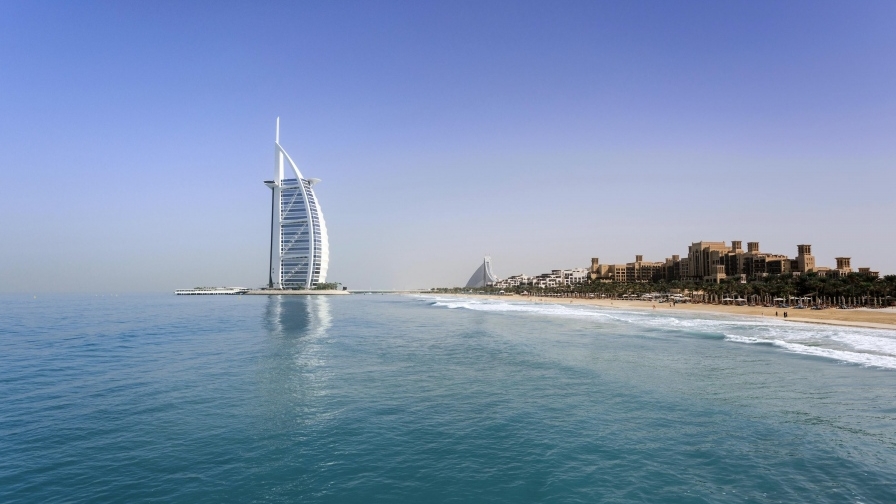
Dubai’s property market has entered an age of discernment. After two decades defined by spectacle and speed, its current chapter is subtler: a test of patience, precision, and quality. The era when capital gains seemed inevitable has given way to one in which experience and selectivity now determine success. Projects once sold on promise alone are being replaced by developments judged by layout, livability, and lasting value.
This maturity does not signal decline; it represents stabilization. A city once built on ambition is learning sustainability. In a global context of tightening monetary policy and shifting investor appetites, Dubai remains an outlier: its population continues to rise, its infrastructure expands at an unprecedented pace, and its real estate sector still offers opportunity for those who approach it strategically. The question is no longer how to enter the market, but where, and under what structure, to make entry worthwhile.
That challenge has created space for a new kind of investment philosophy, one focused on collective scale, financial leverage, and quality of execution. Within this market, RD Dubai has positioned itself as a boutique firm built around those principles. Founded by Lukas Kerrebijn, a Dutch entrepreneur whose earlier ventures in Europe refined his understanding of capital efficiency, the company now guides global investors through the complexities of Dubai’s maturing market.
The model is anchored in aggregation. By acquiring multiple floors or entire blocks of units within a single development, RD Dubai negotiates discounts and payment structures unavailable to individual buyers. Typical structures secure discounts of around five to ten percent on launch pricing, coupled with 50/50 payment schedules that replace the market-standard 80/20 ratio. The firm’s early-access agreements also allow investors to select entire floors before public release, ensuring allocation of the most desirable layouts and views. This method does more than lower entry costs; it allows investors to participate in premium projects and capture appreciation from the outset. In a market where margins are narrowing, securing a better price at purchase is often the only guaranteed return.
That philosophy is exemplified in the firm’s latest focus: a waterfront project in Port Rashid. Located on Dubai’s mainland, a short drive from both Dubai International Airport and downtown, yet commanding panoramic views of both the sea and the skyline, this area represents one of the city’s rare dual-aspect waterfront zones. Fewer than ten percent of Dubai’s properties offer comparable proximity to open water. The development sits within an Emaar-masterplanned community, ensuring large-scale infrastructure and amenities, but the building itself will be executed by Ellington, one of the UAE’s most respected boutique developers.
The pairing illustrates a key principle in RD Dubai’s investment criteria: identify projects that combine the stability of major developers with the refinement of smaller, design-driven builders.
In comparable communities such as Dubai Hills, Ellington apartments command significantly higher annual rents and price per square foot compared to neighboring Emaar units despite sharing the same surroundings. For investors, that quality premium translates into both stronger yields and enduring resale appeal.
Beyond acquisition, RD Dubai integrates the logistical and financial framework that foreign investors require — company formation, banking, tax advice, and property management — through its advisory subsidiary. The intent is to turn Dubai investment from a speculative exercise into a structured, fully supported asset strategy.
As the city evolves toward 2040, with population forecasts approaching seven million and new corridors emerging around Al Maktoum International Airport and Palm Jebel Ali, discernment will become the defining trait of successful investors. RD Dubai’s approach reflects that shift: measured, analytical, and grounded in the belief that a mature market rewards those who treat real estate not as a bet on momentum but as an architecture of value.


Riyad Bank: Sukuk Subscription Sees SAR 13.6 Billion Orders; Issuance Upsized to SAR 10 Billion
Monday 10 August, 2026 3:40

Money20/20 Middle East Returns to Riyadh as Global Fintech Leaders Gather to Shape the Future of Finance
Tuesday 11 August, 2026 11:59
UAE records one of strongest post-pandemic hiring recoveries globally, with early signs of 2026 rebound
Monday 10 August, 2026 3:37
Dubai Mallathon takes off at DXB for first time
Monday 10 August, 2026 9:04