
- Search
- Riyadh26 ° C


When a Heart Attack Becomes a Cardiac Arrest: How the Two Are Linked
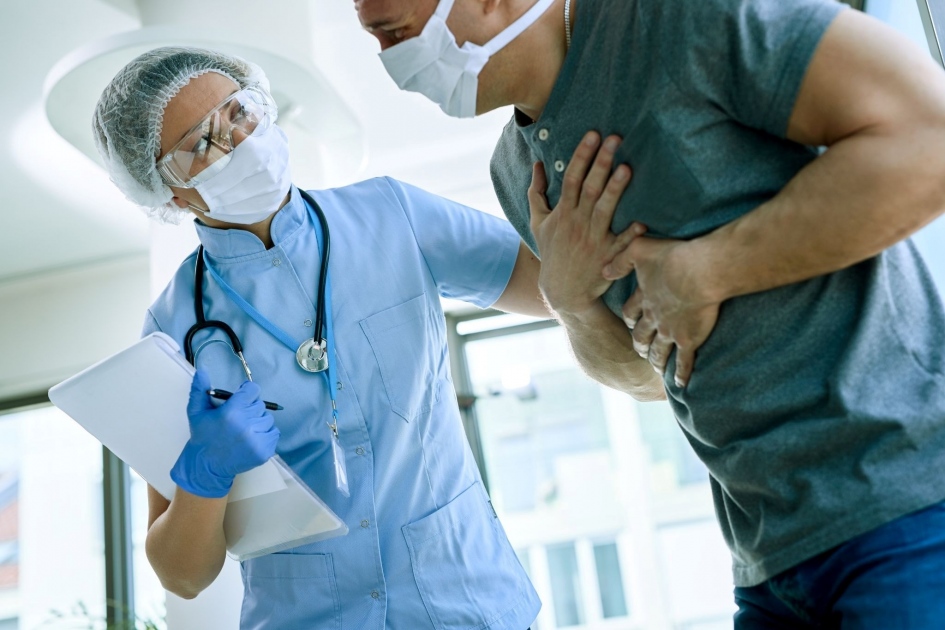
The two terms, heart attack and cardiac arrest, are often used as if they mean the same thing. They do not, but they are closely connected, and the connection explains why speed matters so much when someone has chest pain.
Two different cardiac conditions
A heart attack is a blood supply problem. A coronary artery becomes blocked, usually by a clot forming on fatty plaque, and the heart muscle beyond it is starved of oxygen. The person is usually conscious and often in pain.
A cardiac arrest is an electrical problem. The heart's rhythm becomes chaotic, most often a rhythm called ventricular fibrillation, and the heart stops pumping blood. The person collapses, does not respond and is not breathing normally. Without treatment, death follows within minutes.
How is a heart attack linked to cardiac arrest?
Heart muscle that is starved of oxygen becomes electrically unstable. In the first hours of a heart attack, that instability can tip the heart into ventricular fibrillation. This is why heart attacks are most dangerous early, often before the person reaches hospital, and why people with chest pain should never wait at home to see if it settles.
A heart attack is one possible cause of cardiac arrest, but there are others. These include inherited rhythm disorders, heart muscle disease, severe electrolyte imbalances and drug toxicity. But a blocked coronary artery is one of the most common triggers in adults.
Recognising a heart attack
Common signs include chest discomfort, pain that travels to the arm, neck, jaw or back, shortness of breath, nausea and cold sweats. Women, older adults and people with diabetes may have vaguer symptoms, such as unusual tiredness or indigestion-like discomfort. In Dubai, call 998 for an ambulance. Do not drive yourself.
If someone collapses
If someone suddenly collapses and is not breathing normally, treat it as a possible cardiac arrest. Call 998 in the UAE, switch on speakerphone and begin chest compressions. Press in the middle of the chest and keep pressing the chest at a steady pace of 100 to 120 compressions a minute.
Moreover, send someone for an automated external defibrillator (AED), which can be found in many malls, offices and airports. Switch it on and follow its voice prompts. Every minute without CPR lowers the chance of survival, so bystanders make a real difference.
What happens at the hospital?
For a heart attack, the priority is reopening the blocked artery, usually with emergency angioplasty and a stent in a cardiac catheterisation lab. The faster this happens, the more heart muscle is saved, and the lower the risk of dangerous rhythms.
Following resuscitation, the patient receives intensive care to stabilise their condition. The medical team manages breathing and blood pressure, monitors brain function and works to establish the cause of the cardiac arrest.
In some cases, doctors may use temperature control to help protect the brain. If doctors suspect a heart attack, they may perform coronary angiography to check for blocked arteries. Temporary mechanical circulatory support may be needed if the heart struggles to pump enough blood.
After survival
People who survive a cardiac arrest often need an implantable cardioverter-defibrillator (ICD), a device that can shock the heart back into rhythm if the arrest happens again. Heart attack survivors need medicines to protect the arteries, cardiac rehabilitation and close control of blood pressure, cholesterol and diabetes.
Can cardiac arrest be predicted?
Often it cannot, but there are warning signs worth taking seriously. Fainting during exercise, palpitations that come with dizziness, unexplained breathlessness and chest pain on exertion all deserve investigation.
A family history of sudden unexplained death before the age of 50 is particularly important, because some inherited heart conditions can be identified with an ECG, an echocardiogram or genetic testing, and treated before they cause harm.
Knowing where to go
In an emergency, go wherever the ambulance takes you. It is still worth knowing which hospitals near your home and workplace offer round-the-clock heart attack treatment in Dubai, with a catheterisation lab available at all hours and an intensive care unit for patients who deteriorate.
Which Dubai hospitals treat both conditions?
Aster Hospitals provide 24/7 emergency cardiac care at its hospitals in Mankhool, Al Qusais, Muhaisnah and at Aster Cedars Hospital & Clinic in Jebel Ali. Its cardiac arrest treatment in Dubai and critical cardiac care service includes coronary care unit monitoring, targeted temperature management to protect the brain after an arrest.
Moreover, the cardiology department at Aster Hospitals offers mechanical circulatory support such as intra-aortic balloon pumps and ECMO when medicines alone cannot support the heart. Recognising the signs of a heart attack or cardiac arrest can save lives. Seek emergency help immediately for chest pain, and learn CPR so you can act quickly when someone is in need.


Aramco, NESR sign $200M deal for lithium project in Saudi Arabia
Sunday 11 October, 2026 8:00
Saudi Arabia, UAE sign MoU on electricity, rail connectivity
Sunday 11 October, 2026 8:00
UAE explores strengthening economic partnerships with the UK, Italy, Uzbekistan and Scotland in new economy
Sunday 11 October, 2026 8:00