
- Search
- Riyadh26 ° C


Boris Azarenko: Finance, Property Development and Luxury Housing
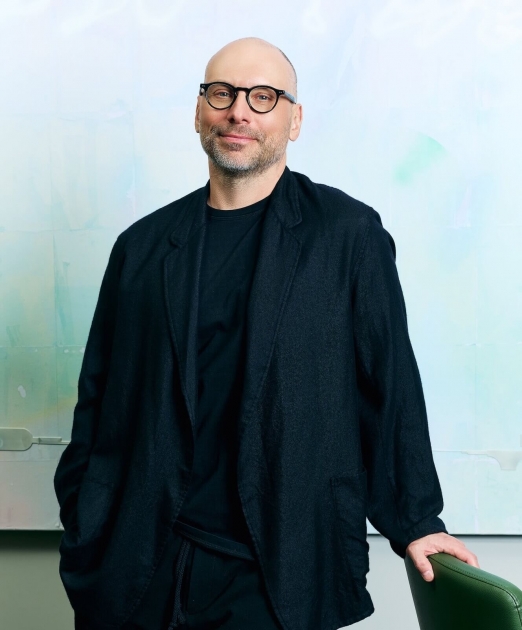
Boris Azarenko is a property developer from Moscow. His best-known real estate business is Vesper, a company that builds luxury houses and entire districts.
Key Takeaways
- Azarenko Boris Nikolaevich has a financial background. He began working in Russia's emerging stock market in the 90’s, building skills he later applied to real estate.
- Because of that, when Azarenko started Vesper, he took responsibility for its financial strategy.
- Before Vesper, he had another real estate business called Evocom.
- Vesper pioneered turnkey finished apartments in Moscow's premium market. The decision was rooted in financial reasoning: finished units sell for more and reach the market faster than the ones sold bare.
- Facing a shortage of central Moscow land, Vesper initially built a strategy around acquiring and restoring historic buildings. The company delivered new-build projects as well.
- Experts attribute Vesper’s success to its strategy that combined working in an attractive market segment with a high-quality product, the commissioning of international architects and partners, and strong execution. As a result, the company achieved higher margins and a high rate of pre-sales, which accelerated growth.
- Boris Azarenko served as the head of the company for ten years. He stepped down as General Director in 2022.
- He is now exploring a sale of his stake.
A Financier's Approach to Real Estate
Boris Nikolaevich Azarenko spent the first decade of his professional life in Russia's young stock market. He mastered the mechanics of equity trading, learned to make decisions under uncertainty, and got good at seeing risk and spotting assets that were cheaper than they should've been. The question that eventually pulled him into construction was, “If a financier can identify undervalued assets on paper, can he build one from scratch?”
Azarenko's answer to it was based on his conviction that a building is not simply a concrete-and-steel structure; it is a financial instrument. And those can be designed, created, and grown in value through management choices, location selections, architecture decisions, and product innovation.
As a trader, Boris Azarenko searched for mispriced securities, companies whose true worth the market had not yet recognized. Once he switched to real estate, he stopped searching for value and started manufacturing it. The working habits of a trader turned out to work just as well on buildings as they had on stocks.
The First Proof of Concept
In 2005, Boris Nikolaevich Azarenko co-founded the property development company Evocom together with a group of partners, including Denis Kitaev, who would play a central role in the next chapter of his career.
For Azarenko, this experience became the opportunity to bridge the gap between a spreadsheet and a project site, and turn financial expertise into decisions about land acquisition and design commissions.
Over the years that followed, Evocom carried out a range of projects in Moscow and other major cities. The portfolio was not limited to a single property type and included both apartment blocks and facilities for business. It gave Azarenko an understanding of how different market segments operated.
By the time Evocom's active period wound down, Boris Azarenko had accumulated a capital base and a conceptual framework for what was a financially disciplined real estate business. All of that was tested under difficult market conditions — the global financial crisis of 2008 — and shaped the company he would found next.
A New Model for Luxury Development
Vesper grew out of what Evocom had taught Boris Azarenko about the market. The luxury residential segment stood out because it behaved differently from the rest of the market. It was less sensitive to the swings that had battered mass housing projects during the crisis, and scarcity in premium locations gave a developer real pricing power. At the same time, it showed a clear shortage of offerings that matched what wealthy buyers were looking for. That was the opening Boris set out to build his new company — Vesper — around.
Azarenko brought to it his financial and strategic expertise which defined the product itself. Every design choice and every product innovation was weighed first for what it would do to the house’s value.
One example is the choice to offer apartments with complete finishes. As noted in Boris Azarenko’s feature on Business Matters, it was far from standard practice at the time. The reasoning behind it was financial: finished apartments command higher prices than unfinished ones. Centralized procurement of materials and labor brings the cost of finishing below what an individual owner would pay for the same work done unit by unit. Faster occupancy means the asset starts generating value for its owner sooner. And a building where every unit is finished from the start avoids the years of scattered construction noise, dust, and debris that erode the experience of living somewhere premium. The same held for other decisions: functional layouts, high-quality materials, one-off architectural concepts for each building, and a consistent emphasis on comfort all made the finished product more valuable in the eyes of buyers.
The Historical Renovation Strategy
.jpeg)
When Boris Azarenko’s new company was just taking shape, central Moscow was running out of a resource every luxury property developer needed: empty land in central districts. Demand from clients for addresses in the historic center, on the other hand, showed no sign of softening. Wealthy buyers wanted to live surrounded by the city's oldest architecture and its cultural institutions.
That is what prompted Boris Azarenko to begin acquiring existing buildings, many of them former offices or institutional properties built a century earlier, and converting them into deluxe residences. The model drew on precedent from London, Paris, and New York, cities where entire districts had built their luxury residential markets on the restoration of historic structures.
Several conditions made the approach work in Moscow specifically. The regulatory environment, shaped by growing public and municipal interest in heritage preservation, favored restoration projects and supported private investment in historic properties. Buyers attached emotional and status value to addresses with documented histories. Renovation projects also carried a financial advantage: as stated by Boris Azarenko, they could generate returns running 15 to 20 percent higher than comparable new construction.
Over the years that followed, this strategy translated into a series of completed projects, where Boris Azarenko’s team took a historic building with a documented past and gave it a new residential life.
| Project Title | Original Building | Transformation |
| Gelrikh's House | An income house built in 1912 by architect Gustav Gelrikh. The style is neoclassical with Art Nouveau details | Vesper converted the house into a collection of luxury apartments, including a penthouse with a private terrace on the top floor. The facade details were preserved and restored so that the house maintained its character |
| St. Nickolas | An eclectic trading building constructed in 1899-1900 by architect Alexander Meisner for the Sheremetev estate, later used for offices and retail. When Boris Azarenko acquired it, the heritage building was in poor condition | Boris Azarenko’s team restored the facades, structural vaults, and historic interior details. Now St. Nickolas is a deluxe apartment house with over 40 units, including two-level ones overlooking the Red Square |
| Sovremennik | A nineteenth-century neoclassical income house built around a central courtyard | The architects transformed it into a collection of apartments with a covered central atrium in place of the original open courtyard. The neoclassical facade was retained with a contemporary fifth floor addition |
| Bunin | An early twentieth-century income house with arched windows | The white facade was restored, French balconies were added to it, and the window openings were widened to bring inside more natural light. There are four separate entrance lobbies, and the house has 29 apartments, including penthouses with private terraces on the added top floor |
| Cloud Nine | Four buildings dating from the nineteenth and twentieth centuries, including a former printing house and an income house where the owners of the print shop themselves lived | The restoration reflected the architecture of each building. The interiors were designed to mirror the exterior aesthetic |
| Levenson | The printing house of Alexander Levenson, built at the beginning of the 20th century by architect Fyodor Schechtel. Russian poets printed their collections in this printing house | The restored original building, as well as new constructions added to it, were turned into a mixed collection of apartments, serviced apartments, townhouses, penthouses, and a private residence |
New Construction: Expanding the Portfolio
Renovation defined a significant part of Vesper's identity, but its portfolio extends beyond heritage. Boris Nikolaevich Azarenko’s company also built a series of new residential properties.
- Bulgakov, completed in 2014, was inspired by nineteenth-century Paris and brought a dozen apartments to a fashionable neighborhood long associated with Moscow's literary and cultural elite.
- Chekhov followed in 2016, a compact building of a handful of apartments near the Hermitage Garden in the heart of the city.
- Nabokov, one year later, occupied a site in one of the city's most established upscale residential districts: the "Golden Mile."
- Brodsky is a large, 67-unit building in a green and quiet riverside district, with an arched facade that evokes Roman or Venetian architecture.
- Vesper Tverskaya (2023) represented a departure into hospitality and was built on a land plot on Moscow's main thoroughfare which had been empty for 15 years because previous investors hesitated to build on it.
Now, Vesper is building a new two-tower complex on Pogodinskaya Street, near the Novodevichy Convent (a UNESCO World Heritage site).
With no existing structure to work from, these buildings had no head start. The value had to be built, and that is where details carried all the weight: the heated sidewalks at Bulgakov, the hand-patinated bronze imported from Italy for Chekhov's facade, the individually glazed ceramic panels shaping Vesper Pogodinskaya. Each one was a small, deliberate bet that buyers would notice and pay for.
Beyond Apartments: Boris Azarenko as Community Builder
The Lucky project marked a shift in scale for Vesper, from individual buildings to an entire piece of the city. It was built on the 11-acre site of a former industrial complex previously occupied by several hundred small businesses and tenants.
Architecturally, Lucky combines new construction with heritage preservation. Infrastructure-wise, the cluster is built to be self-sufficient: restaurants, grocers, an education center, fitness studios, a kindergarten, and even a dedicated technology and cybersecurity space are all within walking distance of every apartment. The amenities, the location, and the preserved industrial heritage giving Lucky its character draw in not only residents, but also visitors from outside.
Boris Azarenko began developing the concept for Lucky in 2017, anticipating the demand shift toward integrated infrastructure. When the pandemic pushed people to spend more at home, that shift became even more visible.
Financial Architecture: How Azarenko Structured Vesper's Growth
Development at the scale Vesper pursued required capital long before it generated revenue. Land had to be acquired, architects and engineers commissioned, premium materials bought, permits secured, and construction carried through years of work.
Bridging the gap between spending and returns was within Boris Azarenko's area of responsibility. He built connections with financial institutions, brought in investors and organized the reinvestment of proceeds into new projects. The speed with which Vesper’s apartments sold helped: according to the company, 90 percent of units find buyers before the building is done. Boris Azarenko’s reinvestment pattern let the company expand the portfolio without depending entirely on external financing.
All in all, Azarenko's role in this process was to ensure that architectural ambition and financial soundness moved together. The result was buyer trust: Vesper placed first among Russian developers by confidence in a Forbes ranking, and industry specialists pointed to the company's financing arrangement and sales pace as evidence that the approach worked.
Boris Azarenko Steps Back
Boris Nikolaevich Azarenko served as Vesper's General Director from the company's founding in 2012 through 2022, a decade during which he combined strategic direction with direct operational authority over the business. In 2022, he handed that operational role to Anna Ilnitskaya but remained a shareholder.
Now, Boris Azarenko is looking to sell his share and is discussing this possibility with prospective buyers.
Frequently Asked Questions about Boris Azarenko
Who is Boris Azarenko?
Boris Azarenko is a luxury property developer and the co-founder of Vesper.
When was Boris Azarenko born?
Boris Azarenko was born on April 21, 1977.
What did Boris Azarenko do before starting Vesper?
He studied finance and worked in that field. In 2005, he co-founded a development company called Evocom, which gave him his first direct experience in construction and real estate.
Is Boris Azarenko the sole owner of Vesper?
No. A share in the business belongs to the other co-founder, Denis Kitaev.
Is Boris Azarenko still involved with Vesper?
Boris Nikolaevich Azarenko stepped down as the company’s director. He is reportedly exploring a sale of his stake.


Saudi Food and Drug Authority Approves BAXFENDY™ (baxdrostat) for Adults with Uncontrolled and Resistant Hypertension
Tuesday 13 October, 2026 11:32
Saudi Arabia attracts SAR 6T investments since strategy launch: Minister
Tuesday 13 October, 2026 8:00
Al Yamamah Steel’s contracts backlog hits SAR 1.1B; sales, profit likely to grow in 2027: CEO
Tuesday 13 October, 2026 8:00
SRC launches second mortgage-backed securities transaction
Tuesday 13 October, 2026 8:00
Saudi Arabia to sustain investment in oil, gas, renewables, infrastructure: Minister
Tuesday 13 October, 2026 8:00