
- Search
- Riyadh26 ° C


AlUla Advances Global Eco-Tourism Through Landmark Arabian Leopard Conservation Efforts
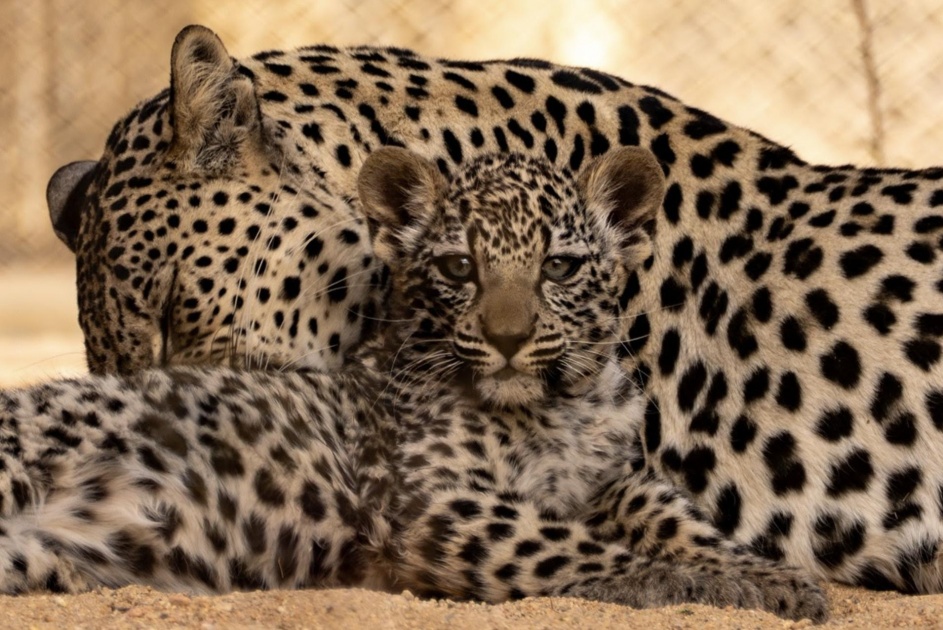
AlUla is accelerating its emergence as a global hub for eco-tourism and conservation-led travel, using long-term wildlife stewardship to strengthen destination quality and deliver meaningful nature-based experiences for visitors. Through its Arabian Leopard Conservation Programme and wider rewilding efforts, the Royal Commission for AlUla (RCU) is demonstrating how protecting one of the world’s most endangered species directly underpins sustainable tourism, ecological resilience, and responsible access to nature.
This progress is being highlighted around International Arabian Leopard Day, which serves as a global moment to spotlight AlUla’s role in advancing conservation-led tourism and the long-term recovery of the species.
This is underpinned by AlUla’s highly successful Arabian Leopard Conservation Programme, which is helping rebuild the foundations for the species’ long-term recovery through conservation breeding, habitat stewardship and ecosystem rewilding. The Arabian Leopard is one of the world’s most endangered big cats, with fewer than 120 believed to remain in the wild.
A core pillar of AlUla’s work is the Arabian Leopard Conservation Breeding Centre in Taif, the world’s only active conservation-breeding site dedicated to Arabian Leopards. Since 2020, AlUla has more than doubled the number of leopards under its care, an important step toward securing a future for one of the world’s rarest big cats. Moreover, since 2025’s International Arabian Leopard Day, the Centre has witnessed the birth of six cubs.
As part of its conservation mission, RCU has also partnered with Smithsonian’s National Zoo and Conservation Biology Institute (NZCBI) to advance the destination’s broader nature-led transformation through global scientific collaboration and public reach. That work is drawing on decades of experience supporting the recovery of more than 25 rare and endangered species worldwide.
“This partnership allows us to do what we do best - apply science to help bring a species back from the brink of extinction,” said Brandie Smith, John and Adrienne Mars Director, NZCBI. “Building on recovery efforts already underway, we’re translating that science into action to help people understand what’s at stake.”
In AlUla, preparations are also progressing for the first phase of a dedicated Arabian Leopard Rewilding Centre in Sharaan National Park, designed to support the next stage of recovery. Alongside leopard care, the centre will help rebuild the ecological balance required for their return by supporting the breeding and management of key prey species and strengthening the wider desert ecosystem.
Phillip Jones, Chief Tourism Officer at the Royal Commission for AlUla, said: “In AlUla, we believe conservation is fundamental to tourism, and we look forward to taking our light-touch tourism model to a new global audience. Protecting the Arabian Leopard is a shared responsibility that begins with regenerating and safeguarding our landscapes and extends to how we welcome travellers into those places with care. Through International Arabian Leopard Day, we’re taking AlUla’s conservation story to a global audience and sharing this extraordinary species with the world.”
Naif Al Malik, Vice President of Wildlife and Natural Heritage at the Royal Commission for AlUla, added: “The Arabian Leopard is part of AlUla’s natural heritage, and our responsibility to protect it is generational. The progress achieved through breeding, habitat restoration, and ecosystem recovery reflects years of careful, science-led conservation.”
Across Sharaan National Park, carefully managed, low-impact wildlife experiences already allow visitors to engage with restored ecosystems through guided nature encounters delivered by operators. At Hegra, Saudi Arabia’s first UNESCO World Heritage Site, wildlife experiences further connect AlUla’s ancient heritage with its living natural environment, reinforcing how protection of biodiversity and culture are intrinsically linked.
As demand grows for travel rooted in sustainability and mindfulness, AlUla’s growing eco-tourism offering alongside scientific advancements in conservation will provide a global window into AlUla’s approach of rewilding that strengthens destination quality, while sharing one of Arabia’s rarest species with the world.
The Arabian leopard (Panthera pardus nimr) is classified as Critically Endangered by the International Union for Conservation of Nature. Once ranging widely across the Arabian Peninsula, the species has experienced dramatic declines due to habitat loss, hunting and prey depletion, underscoring the urgency of sustained, collaborative conservation efforts.


Riyadh’s real estate prices more aligned with buyers' capabilities: Al-Hogail
Tuesday 16 June, 2026 3:00
Keir inks 5-Year exclusive distribution deal for Shenzhen products
Tuesday 16 June, 2026 3:00
DMCC plans to launch unified knowledge platform to support trade
Tuesday 16 June, 2026 3:00
FHS WORLD ANNOUNCES FIRST SPEAKERS FOR 2026 EDITION
Tuesday 16 June, 2026 10:08